So there’s a rule for all journalists who work for the Gannett corporation: You’re only allowed to fly in a plane to cover a story if that story is a natural disaster.
So when I was assigned a story on world-famous aerobatic pilot Sean D. Tucker, I had to figure out how to get a shot of him flying without running afoul of the rules.
Now, I don’t mind bending the rules occasionally, but I had already been reprimanded in this job for going flying, and you can only plead ignorance once.
My solution was a couple Bogen Magic Arms, Super Clamps, a remote shutter release and a fisheye lens in the cockpit. Here’s the setup:
This was the first time I had ever mounted a camera in a cockpit, but Sean and his crewman Ian checked my work and approved. I told Sean to press the button as much as possible, especially when he felt the sun on his face — it was an easy task for him, a true professional who’s done this sort of thing before.
In the photo below, you can see the camera setup in front of Sean’s face:
I was a little nervous as Sean flew and I waited for my gear to return, but everything worked perfectly. The photo ran huge on our front page to accompany a feature on Sean and his flight school.
Eileen is a wonderful lady who I met when she was just 99 years old. A reporter and I interviewed her at her home, where she smiled huge smiles and laughed as she recalled stories from her past. As we drove away, she rang a bell that hung from her porch roof. Just because. I smiled for a long time after our visit.
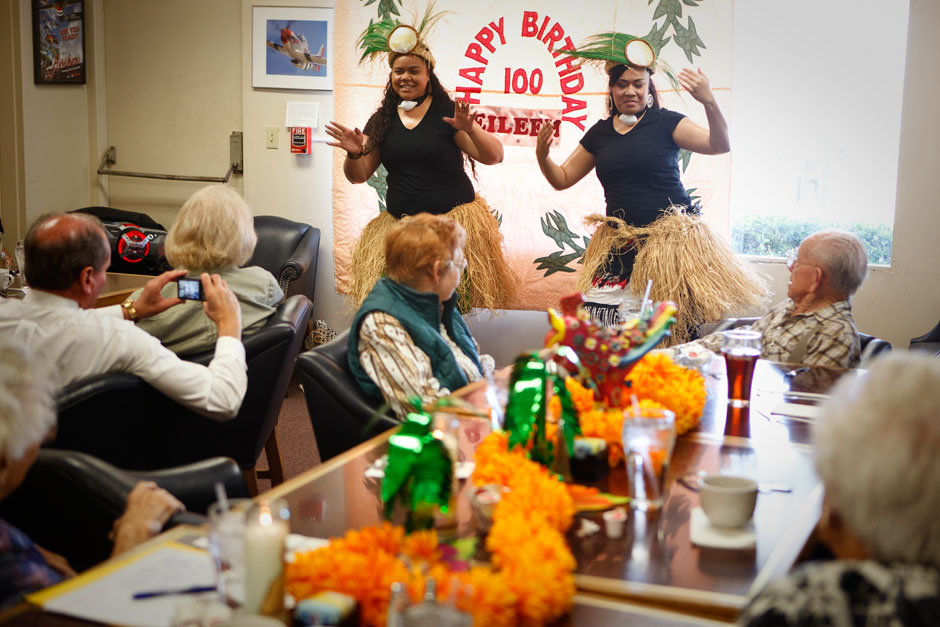
So I was thrilled to hear that we got invited to cover her 100th birthday party. It was thrown for her by a friend who had already crossed into centenarian-ism. She bought Eileen a “Secrets of Longevity” book, and everybody appreciated the humor.
At the end of the party, after Tongan dancers performed for her, the guests sang ‘happy birthday,’ and Eileen pretended to conduct an orchestra, smiling the whole time.
The photo came from the scene of a fatal shooting. In this case, the death was a six-year-old who was killed by an errant bullet while he was standing in the kitchen of his apartment, the unintended victim of a drive by shooting. I don’t know the name of the young man in this picture, but to me the photo says a lot about the crime situation in Salinas: A person is killed, the police round up young suspects to try to get information, no one talks.
This photo was not among those that we published in the next day’s paper. Other pictures — police making arrests, the ambulance — were chosen to tell the story.
But sometimes a photo like this, which don’t tell the specific story of the day, tells a greater story about the community.
It’s not easy to win in the SFBAPPA contest. The quality of work in the Bay Area is extremely high, and we’re competing against photographers from the San Francisco Chronicle, the San Jose Mercury News, and dozens of other papers who photo staffs are stocked with talented shooters. The San Francisco Bay Area Press Photographers’ Association is a great organization, and I’m honored to be a member and a winner this year.
I just returned from a quick trip to Los Angeles to visit my pal George. He took me on a tour of his neighborhood, East Los Angeles, and as we chatted I occasionally pointed my camera at scenes that caught my eye. Here are a few.
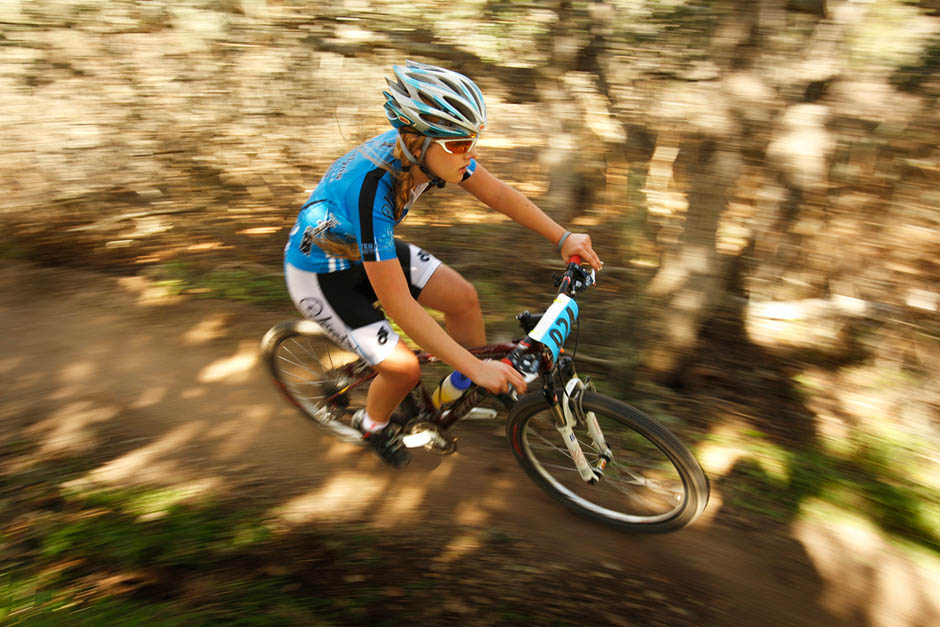
The lands of the former Fort Ord in Monterey County are laced with trails and roads, perfect spots for riding bicycles.
I recently spent a couple days photographing races put on by the Central Coast Cycling Club, which has been staging races since 1995. I also wrote the story for my newspaper, a front-page piece that examined the pressures development is putting on the open space that cyclists now enjoy.