

This rodeo had everything I was looking for: great light, dirt and danger, and a relaxed attitude about where I could go to shoot photos.
It was the first time the Monterey County Fair had ever featured a rodeo. This was a much smaller affair than the 100th California Rodeo Salinas, which I covered in July. And while I love shooting the Salinas rodeo, things can get a little formal there. In Salinas I couldn’t, for example, just climb onto the chutes and stick my camera a few inches from a bull’s nose — which wasn’t much of a problem in Monterey. It’s the same kind of reason that many pro photographers like shooting little league games after years of major league — it’s refreshingly open.
Click the thumbnails below …

Members of the military lead a group of flag carriers Friday at the start of the first-ever rodeo at the Monterey County Fair.

People hold a giant flag Friday at the start of the first-ever rodeo at the Monterey County Fair.

A horse rears during an event Friday during the Flying U Rodeo at the Monterey County Fair.

Cowboys watch from behind the chutes Friday during the Flying U Rodeo at the Monterey County Fair.

J.L. Hughes waits behind the chutes Friday during the Flying U Rodeo at the Monterey County Fair.

Junior Sator, 6, gets a hand riding a calf Friday during the Flying U Rodeo at the Monterey County Fair.

A bull rider competes Friday during the Flying U Rodeo at the Monterey County Fair.
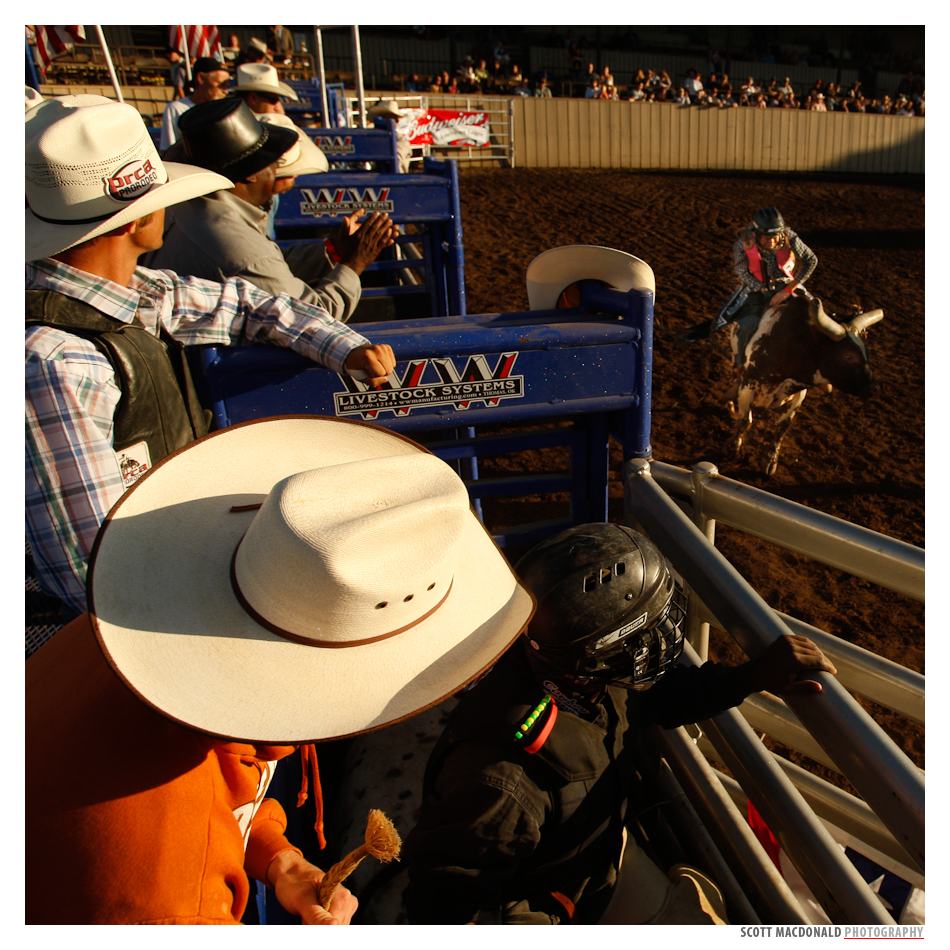
Cowboys watch a bull rider compete Friday during the Flying U Rodeo at the Monterey County Fair.

The chute opens for Traivonn Hughes, 16, of Compton, during the bull riding competition Friday during the Flying U Rodeo at the Monterey County Fair.
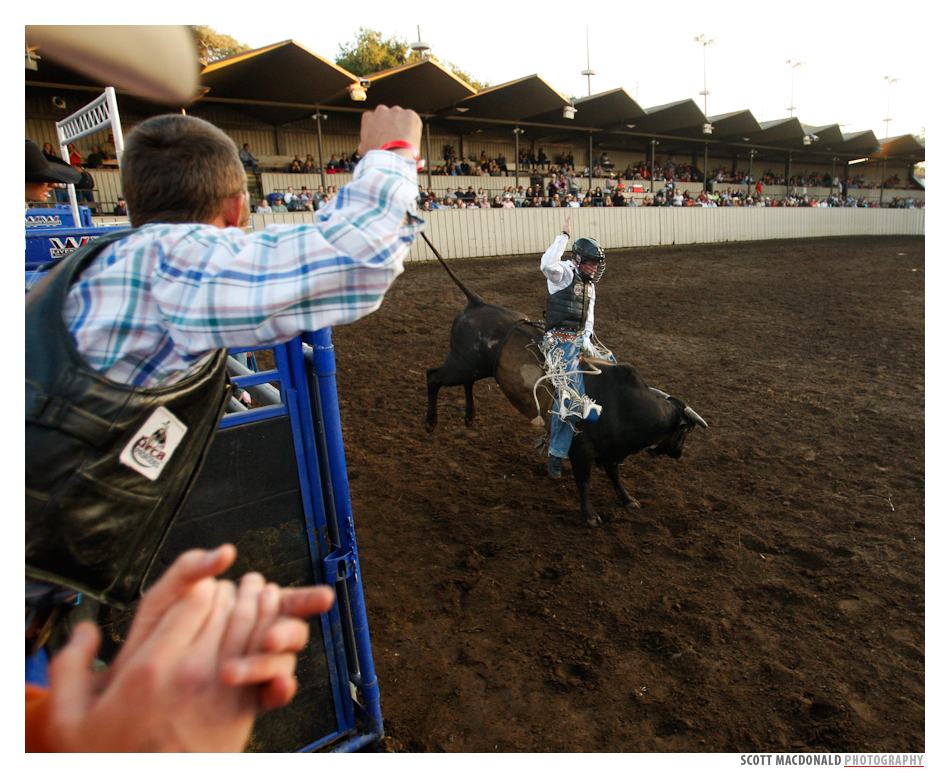
Cowboys cheer as Kenneth Restani of Carmel Valley rides to a score of 86 Friday in the bull riding event at the first-ever rodeo at the Monterey County Fair. Rodeo action continues through the weekend, 6 p.m. Saturday and 7 p.m. Sunday.
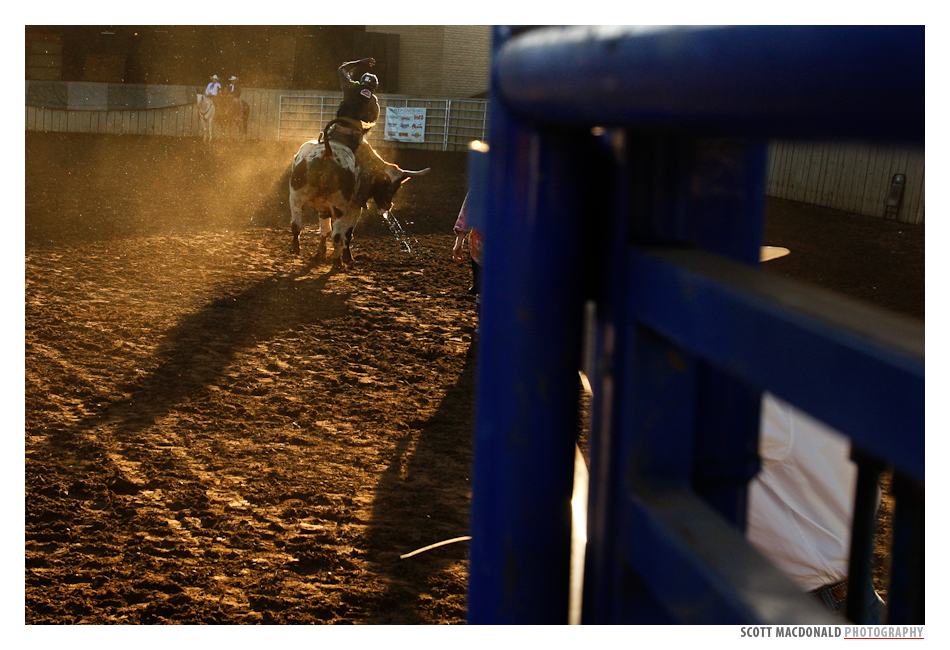
Traivonn Hughes, 16, of Compton, competes in bull riding Friday during the Flying U Rodeo at the Monterey County Fair.
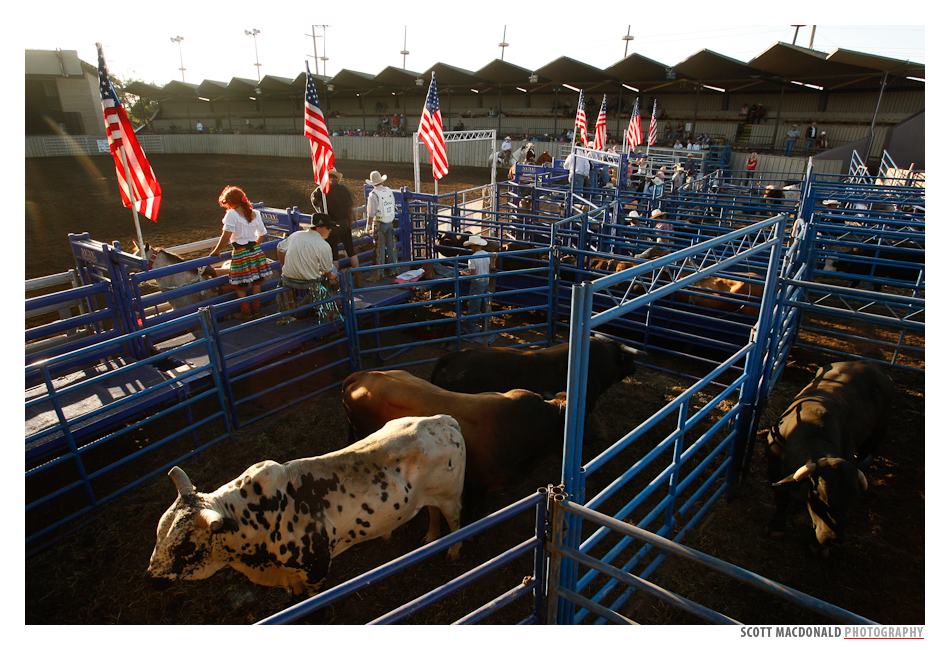
Bulls wait behind the chutes Friday during the Flying U Rodeo at the Monterey County Fair.

Thomas Bushey of Lincoln — dressed as a woman — gets thrown while competing in the “Wild Ride” event Friday during the Flying U Rodeo at the Monterey County Fair.

Michael Braasch of Salinas prepares to compete in bull riding Friday during the Flying U Rodeo at the Monterey County Fair.

John Fischer of Louisville, Kentucky, prepares for his first-ever bull ride Friday during the Flying U Rodeo at the Monterey County Fair.

John Fischer of Louisville, Kentucky, falls during his first-ever bull ride Friday during the Flying U Rodeo at the Monterey County Fair.

Andreas McLeod of Corral de Tierra takes off his helmet after competing in the bull riding event Friday at the first-ever rodeo at the Monterey County Fair.

Nicholas Sartor of Fort Worth, Texas, is thrown after riding the a winning score of 87 in the bull riding competition Friday during the Flying U Rodeo at the Monterey County Fair.

Nicholas Sartor of Fort Worth, Texas, celebrates his winning score of 87 in the bull riding competition Friday during the Flying U Rodeo at the Monterey County Fair.


